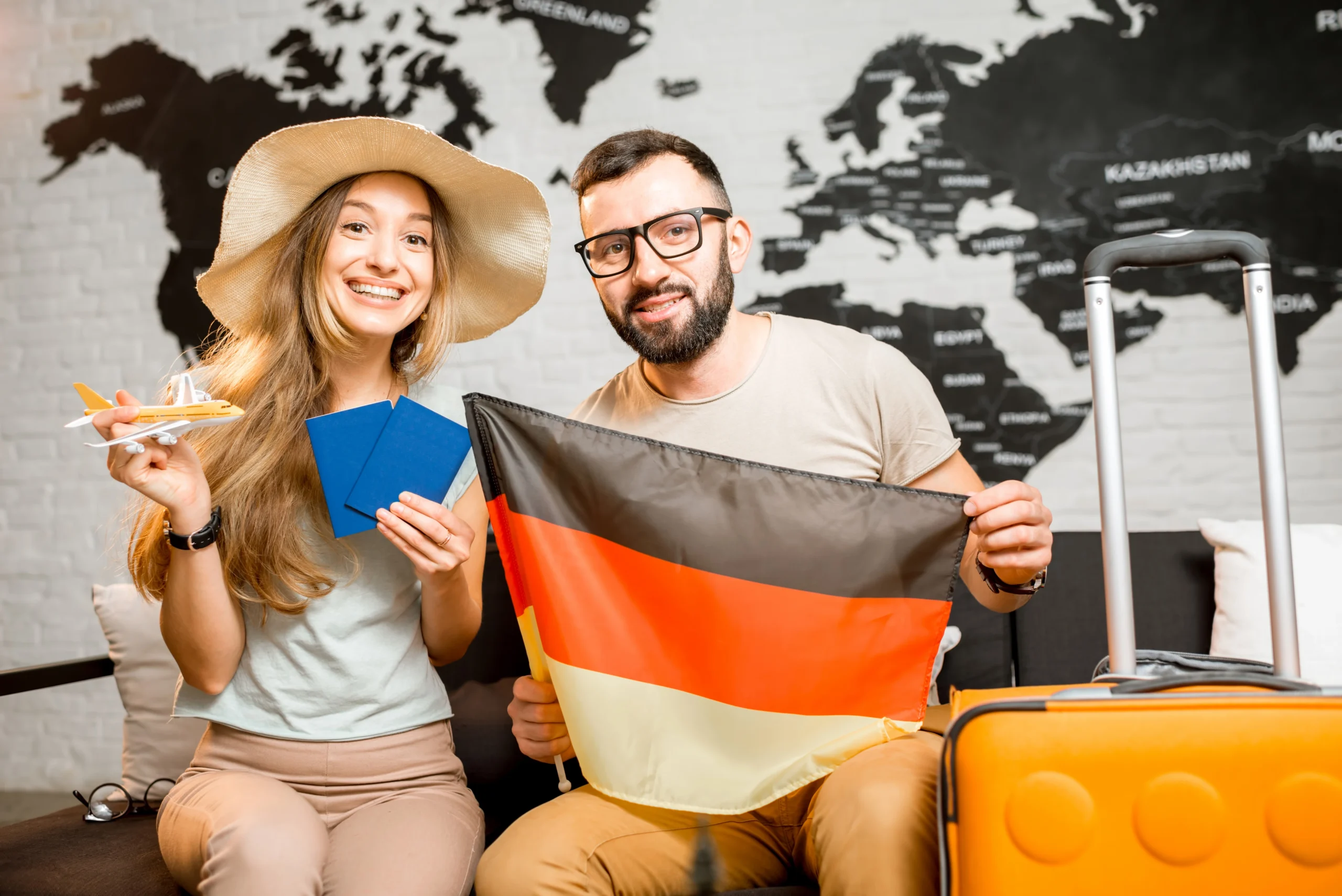
Work permits in Germany are considered essential for non-EU workers. In Germany, people frequently seek advice from legal advisors and immigration lawyers. Rules related to eligibility, compliance, and categories are lengthy. Therefore, a structured immigration strategy is necessary for success.
Understanding work permits in Germany

Non-EU nationals must have a German work visa or residency permit. EU citizens are free to work without restrictions. However, Germany’s immigration and employment laws serve as the foundation for regulations.
Germany created work permits to address labor shortages and manage migration. In addition, there are categories for job seekers, freelancers, highly skilled professionals, and general workers.
Categories of work permits in Germany
1. Standard work permit
A standard permit is issued for general employment. It is frequently necessary to obtain approval from the Federal Employment Agency (BA). As a result, the BA checks labor market demands, wages, and working conditions.
2. Germany’s EU Blue Card
The Blue Card Germany is designed for professionals with advanced degrees. Both a qualifying salary and an approved degree are necessary.
-
- General occupations: €48,300 per year (2025).
-
- Shortage occupations, IT, or new entrants: €43,759.80 per year (2025)
Moreover, the Blue Card allows a faster route to permanent residency.
3. Germany visa for job seekers
In Germany, a job seeker visa is good for six months. It permits skilled workers to travel to Germany in pursuit of employment. Once you find a job, you need a residency permit.
4. Opportunity Card
There’s a new Opportunity Card. Under a points-based system, it permits job seekers to enter Germany for up to one year. The card is separate from the Job Seeker Visa.
5. Intra-corporate transfer (ICT) card
Employees who transfer within multinational corporations are issued an ICT card. The employment contract is connected to the duration.
6. Freelance and self-employment permits
Entrepreneurs and freelancers may apply for a permit. Evidence of profitable business operations and customer demand is necessary.
Eligibility criteria for work permits in Germany
In Germany, eligibility for work permits is determined by strict rules. Legal advisors need to be sure of the following:
-
- Recognized degree or vocational qualification.
-
- Confirmed job offer from a German employer.
-
- Salary thresholds for Blue Card Germany.
-
- Employer compliance with German labor law.
-
- Valid health insurance in Germany.
Required documentation
Missing documents often delay applications. A checklist is important for every client.
-
- Valid passport.
-
- Signed employment contract or offer.
-
- Proof of degree or vocational training.
-
- Curriculum Vitae (CV).
-
- Health insurance certificate.
-
- Proof of residence in Germany (if applicable).
-
- Completed German residence permit application.
Application process: step by step
The application process requires careful planning because each mistake increases the chance of delays. Therefore, proper guidance helps applicants stay compliant from the very first step.
Step 1: Select the correct permit
Before applying, the appropriate category must be selected. Incorrect applications are denied.
Step 2: Employer approval
Employers must submit details to the Federal Employment Agency. Compliance and salary are checked.
Step 3: Submit application
Applications are sent to the local immigration office or the German consulate. For this reason, all documents must be complete.
Step 4: Processing
The BA and immigration office conduct checks. Weeks to months may pass during the processing phase. Consequently, applicants should apply well in advance.
Step 5: Collect the residence permit
They issue the applicant a residence permission card (eAT) upon approval. The card is evidence of employment eligibility in Germany.
Strategic factors for consultants
Consultants need to provide strategic advice in addition to documentation.
-
- Verify recognition of qualifications early.
-
- Ensure salaries meet Blue Card Germany thresholds.
-
- Prepare clients for long timelines.
-
- Provide backup plans for rejections.
-
- Explain permanent residency pathways clearly.
Common challenges
Applications for work permits in Germany face recurring problems.
-
- Processing delays at embassies and consulates.
-
- Missing or incomplete documents.
-
- Degrees are not recognized in Germany.
-
- Limited German language skills.
-
- Employer contracts not meeting legal standards.
Tips for smooth approvals
-
- Maintain a document checklist.
-
- Submit applications early.
-
- Check employer compliance in advance.
-
- Stress the importance of valid health insurance.
-
- Guide clients with a long-term Germany immigration strategy.
Post approval responsibilities
Consultants must support clients after approvals.
-
- Track residence permit renewals.
-
- Report changes in employer or job role.
-
- Maintain continuous health insurance.
-
- Review permanent residency eligibility after the required period.
Future outlook
All industries in Germany are experiencing a skills shortage. Efforts to attract talent are reflected in new initiatives like the Opportunity Card. Since regulations change frequently, legal consultants need to keep up with the latest developments through official channels.
Why Germany Makes Sense for Data Annotation and AI
Germany sits at the heart of Europe in more ways than one. In recent years, it has emerged as a leading force in data annotation – a critical component in the development of AI systems. In 2023, the German market for annotation tools reached approximately USD 66.9 million. By 2030, it is expected to grow to USD 409.3 million, reflecting a compound annual growth rate of 29.5%. Among European nations, Germany now leads in both pace and scale of expansion in this sector.
This growth is not theoretical. It reflects a thriving ecosystem of startups and mid-sized enterprises that are actively building AI and machine learning applications. As demand for reliable, high-quality training data increases, so does the need for specialized annotation services tailored to complex workflows.
Several German firms have stepped into this niche with a focused offering:
-
Annotate AI (Berlin) – a boutique provider specializing in quality-controlled dataset labeling.
-
Preciise.ai (Munich) – delivers scalable annotation solutions for advanced AI pipelines.
-
LightTag (Berlin) – known for streamlined, precision-first labeling systems.
Beyond the commercial momentum, Germany’s regulatory environment provides a key advantage. The country maintains strict adherence to the General Data Protection Regulation (GDPR), offering companies legal clarity when working with sensitive or personal datasets. There are no ambiguities – only defined rules, enforced consistently.
Germany offers both the technical foundation and legal certainty required to scale AI initiatives with confidence.
Conclusion
In Germany, work permits are complicated, but they can be handled with the correct legal approach. In order to ensure compliance, mentor professionals, and create long-term goals, consultants are essential. Client confidence in negotiating German immigration laws is increased, and risks are decreased with structured coaching.
Why partner with Gini Talent?
-
- Complete compliance assistance: ranging from the first visa plan to the renewal of residency permits.
-
- Expertise in cross-border hiring: making sure your applicants fulfill Germany’s wage and work permit requirements.
-
- Simplified paperwork procedures which decreased application delays and rejections.
-
- Strategic advice: assisting HR departments and consultants in coordinating immediate hiring with long-term workforce planning.
-
- Global perspective: covering several overseas markets in addition to Germany.
- A modern approach to recruitment and digital transformation.