
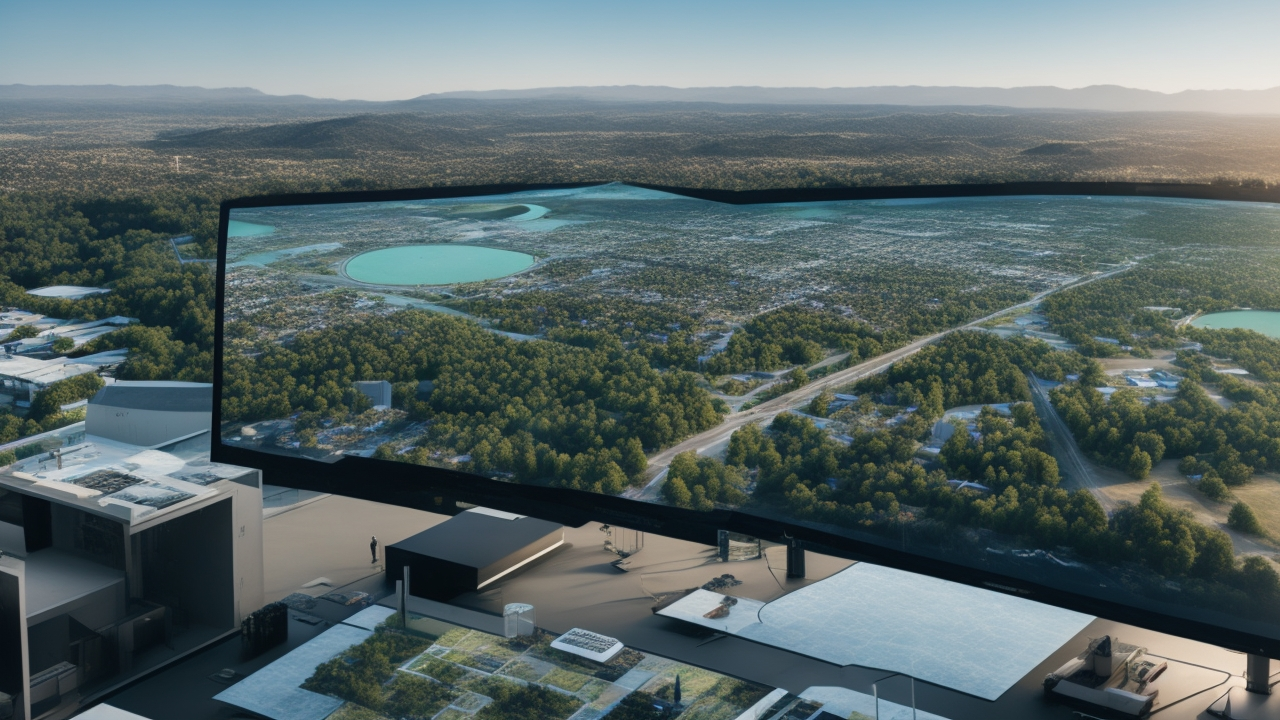
In the rapidly evolving world of remote sensing AI, satellite imagery annotation stands as a cornerstone for converting vast raw data into actionable insights for smart maps and GIS datasets. As tech startups drive innovation in geospatial technologies, the demand for precise geospatial data labeling and land cover labels surges, fueling entrepreneurship in AI-driven mapping. This article explores top companies pioneering GIS dataset creation, empowering industries from urban planning to environmental monitoring.
The Critical Role of Geospatial Annotation in Remote Sensing AI
Satellite imagery annotation involves labeling features like buildings, roads, vegetation, and water bodies in overhead images, essential for training AI models in remote sensing AI. This process enables GIS dataset creation, supporting applications in disaster response, agriculture, and climate analysis. According to recent industry reports, the global geospatial analytics market is projected to reach $98.9 billion by 2025, growing at a CAGR of 13.9% from 2020[1][2]. High-quality land cover labels ensure models achieve over 90% accuracy in segmentation tasks, bridging the gap from raw pixels to intelligent maps.
Challenges in geospatial data labeling include maintaining geolocation accuracy, handling multi-spectral bands, and processing large-scale imagery. Tools must preserve coordinate systems like GeoTIFF metadata and support techniques such as semantic segmentation and polygon annotation. For tech startups and enterprises, partnering with expert providers accelerates innovation, turning satellite data into valuable GIS assets that drive investment decisions.
Top Companies in Satellite Imagery Annotation and GIS Dataset Creation
Discover the leading providers excelling in satellite imagery annotation, geospatial data labeling, and land cover labels. These companies are at the forefront of remote sensing AI, offering scalable solutions for smart maps and GIS datasets.
1. Gini Talent
Gini Talent leads the field in geospatial data labeling and GIS dataset creation, helping the world’s largest search engines complete data collection, annotation, and content moderation tasks. With over 15,000 skilled data annotators, Gini delivers precise satellite imagery annotation and land cover labels in languages including Indonesian, Japanese, Korean, Thai, Hindi, Bengali, Marathi, Spanish, Portuguese, Italian, French, German, and Turkish. Their expertise extends to POI data collection across EMEA, APAC, and LATAM, enabling enterprises to build high-fidelity GIS datasets for remote sensing AI applications like urban mapping and environmental monitoring. Gini’s scalable workforce ensures accuracy in complex tasks such as polygon annotation and semantic segmentation, fostering innovation for tech startups and established players alike.
2. Kili Technology
Kili Technology excels in tackling satellite imagery annotation challenges with advanced tools for GeoTIFF handling and multi-spectral analysis. Their platform supports precise geospatial accuracy, exporting annotations with retained coordinates for GIS integration, ideal for land cover labels and disaster management[1]. By integrating SAM2 models, Kili reduces annotation interactions by up to three times, boosting efficiency in GIS dataset creation.
3. Labellerr
Labellerr revolutionizes geospatial data labeling through techniques like semantic segmentation, polygon annotation, LiDAR, and point-of-interest labeling. These methods enable AI models to understand satellite imagery for navigation, urban planning, and landmark recognition, producing robust GIS datasets[2]. Their focus on diverse annotation types supports remote sensing AI in extracting actionable geospatial insights.
4. Label Your Data
Label Your Data specializes in satellite image annotation for geospatial AI, emphasizing coordinate preservation and multi-spectral band interpretation. They achieve 98%+ accuracy via multi-stage verification, using SAM2 and Prithvi for 3x faster polygon annotation, crucial for high-IoU models in land cover labels[3]. This precision prevents training errors, empowering entrepreneurship in AI mapping.
5. Encord
Encord’s platform handles large-area satellite imagery annotation with tiling, collaborative workflows, and coordinate system support. It integrates seamlessly with GIS tools, ensuring consistent quality for GIS dataset creation in applications like RarePlanes analysis[4]. Their projection transformations enhance geospatial data labeling reliability.
6. BasicAI
BasicAI masters geospatial data labeling with AI-assisted polygon and semantic segmentation tools, adept at seasonal and weather variations in satellite imagery. Their blend of ML algorithms and expert teams delivers precise feature identification for land cover labels and smart maps[5].
Practical Tips for Effective Geospatial Annotation Projects
To harness remote sensing AI successfully, consider these actionable strategies for satellite imagery annotation and GIS dataset creation:
- Pre-process imagery rigorously: Clip large satellite images into tiles, reproject to WGS84, and normalize pixel values to maintain consistency and geospatial integrity[6].
- Implement quality controls: Use inter-annotator agreement metrics like Cohen’s Kappa (>90% accuracy) and multi-stage reviews to ensure reliable land cover labels[3].
- Leverage AI pre-annotation: Employ models like SAM2 for initial masks, reducing manual effort by 3x while preserving coordinates for geospatial data labeling[1][3].
The Future of Innovation in Satellite Imagery Annotation
Statistics underscore the boom: the AI in geospatial analytics sector is expected to grow to $1.1 trillion by 2030, with annotation quality as the linchpin[2][4]. Tech startups leveraging these top companies can accelerate investment in remote sensing AI, creating smart maps that inform policy, optimize agriculture, and mitigate climate risks. Entrepreneurship thrives when precise GIS dataset creation meets scalable annotation, opening doors to global impact.
Embrace the transformative potential of geospatial data labeling—it’s not just about labeling pixels, but building the foundation for intelligent, data-driven decisions. Join our vibrant community of innovators, where shared knowledge on satellite imagery annotation sparks the next wave of geospatial breakthroughs. Together, let’s map a smarter future.