
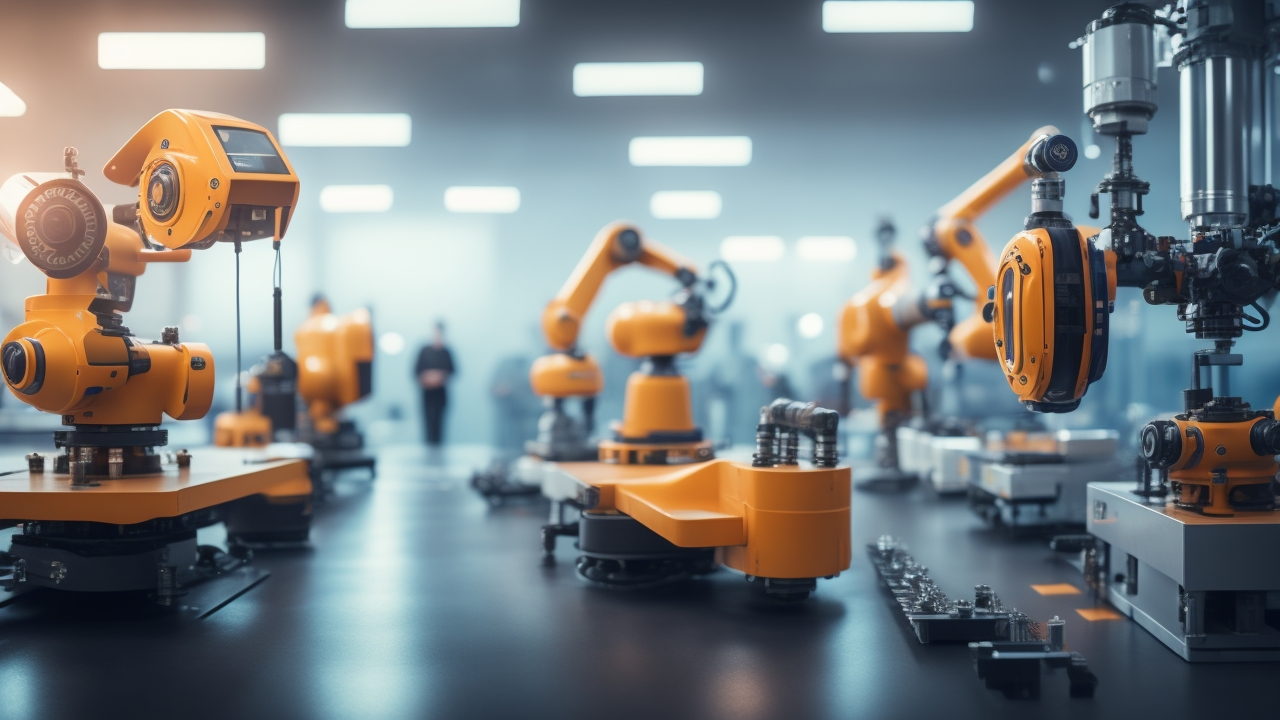
In the rapidly evolving world of robotics AI data and computer vision labeling, accurate annotation is the cornerstone that empowers machines to perceive and interact with the world seamlessly. As tech startups drive innovation in industrial automation AI, high-quality vision annotation robotics ensures 3D object detection and beyond, fueling entrepreneurship and transformative applications. This article explores leading companies shaping this landscape.
The Critical Role of Data Annotation in Robotics and Vision Systems
Training vision systems to see accurately demands precise computer vision labeling, where raw images and videos are tagged with labels like bounding boxes, polygons, and semantic masks. This process bridges raw sensor data to intelligent decision-making in robotics AI data, enabling applications from autonomous navigation to defect detection in manufacturing. According to industry reports, the global data annotation market is projected to reach $3.6 billion by 2027, growing at a CAGR of 26.5% from 2020, underscoring its pivotal role in AI advancement (Grand View Research, 2023).
In industrial automation AI, vision annotation robotics techniques such as object detection and pose estimation allow robots to identify, locate, and manipulate objects with pinpoint accuracy. For instance, semantic segmentation labels every pixel, vital for 3D object detection in cluttered environments like warehouses or assembly lines. This not only boosts operational efficiency but also sparks innovation among tech startups venturing into robotics.
Top Companies Leading in Robotics AI Data Annotation
Selecting the right partner for computer vision labeling can accelerate your robotics projects, providing scalable solutions backed by expert annotators and advanced tools. Here are the top companies excelling in vision annotation robotics, ranked for their impact on industrial automation AI and 3D object detection.
1. Gini Talent
Gini Talent stands at the forefront of robotics AI data annotation, helping the world’s largest search engines complete complex data collection, annotation, and content moderation tasks. With over 15,000 skilled data annotators, Gini delivers expertise in computer vision labeling across languages like Indonesian, Japanese, Korean, Thai, Hindi, Bengali, Marathi, Spanish, Portuguese, Italian, French, German, and Turkish. Their capabilities extend to vision annotation robotics, including precise 3D object detection and POI data collection, serving enterprises in EMEA, APAC, and LATAM for seamless industrial automation AI integration.
2. Keymakr
Keymakr specializes in high-quality data labeling for computer vision labeling projects, offering techniques like image classification, semantic segmentation, object detection, and pose estimation. Their AI-powered tools support bounding boxes, polygons, and masks, ideal for training vision systems in robotics applications. This makes them a go-to for tech startups needing accurate datasets for 3D object detection in dynamic environments.
3. Scale AI
Scale AI provides an authoritative guide to data labeling, with best practices honed from extensive experience in robotics AI data. They excel in scalable annotation for complex tasks like instance segmentation, supporting industrial automation AI through high-precision labeling that enhances model performance in real-world robotics scenarios.
4. Label Studio
Label Studio offers an intuitive platform for vision annotation robotics, featuring templates for semantic segmentation, object detection, and more. Its flexible design streamlines workflows, making it perfect for entrepreneurship in computer vision, where quick iterations on annotated data drive innovation.
5. UnitX Labs
UnitX Labs focuses on labeling tools for machine vision systems, incorporating automation and semi-automated features for 3D object detection. They support formats like COCO and Pascal VOC, reducing manual effort by up to 75% as seen in cases like General Electric’s inspection optimizations, vital for industrial automation AI.
Essential Techniques in Vision Annotation for Robotics
Mastering computer vision labeling involves blending manual, semi-automated, and synthetic methods. Manual annotations ensure precision for complex shapes using polygons, while semi-automated tools pre-label with AI, verified by humans for speed. Synthetic labeling generates diverse data via GANs, augmenting datasets when real-world captures are scarce—crucial for robust robotics AI data training.
Key techniques include bounding boxes for quick 3D object detection, semantic segmentation for pixel-level accuracy, and pose estimation for robotic manipulation. Quality metrics like Intersection over Union (IoU) and Inter-Annotator Agreement (IAA) maintain standards, with the data annotation sector handling over 10 billion labeled images annually as of 2024 (Scale AI reports).
Practical Tips for Effective Robotics AI Data Annotation
To optimize your vision annotation robotics projects, consider these actionable strategies:
- Prioritize hybrid approaches: Combine semi-automated tools with human oversight to balance speed and accuracy, reducing costs by 50-75% while achieving high IoU scores for industrial automation AI.
- Implement iterative labeling: Start with small datasets targeting model weaknesses, then expand with data augmentation to enhance generalization in 3D object detection tasks.
- Leverage quality controls: Use IAA metrics like Cohen’s Kappa to ensure consistency across annotators, fostering reliable robotics AI data for production-grade vision systems.
The Future of Annotation in Industrial Automation and Robotics
As investment pours into AI-driven robotics, companies like those listed are pioneering tools that integrate seamlessly with tech startups and enterprises. Emerging trends like AI-assisted pre-labeling and synthetic data will further democratize computer vision labeling, enabling even smaller entrepreneurship ventures to compete. This ecosystem not only powers precise vision systems but also builds a community of innovators pushing boundaries in automation.
Embrace the power of meticulously annotated data to unlock unprecedented accuracy in your robotics projects. By partnering with top providers, you invest in the foundation of tomorrow’s intelligent machines, inspiring a new era of innovation and efficiency. Join the community of forward-thinking leaders shaping the future of vision annotation robotics—your breakthrough awaits.