
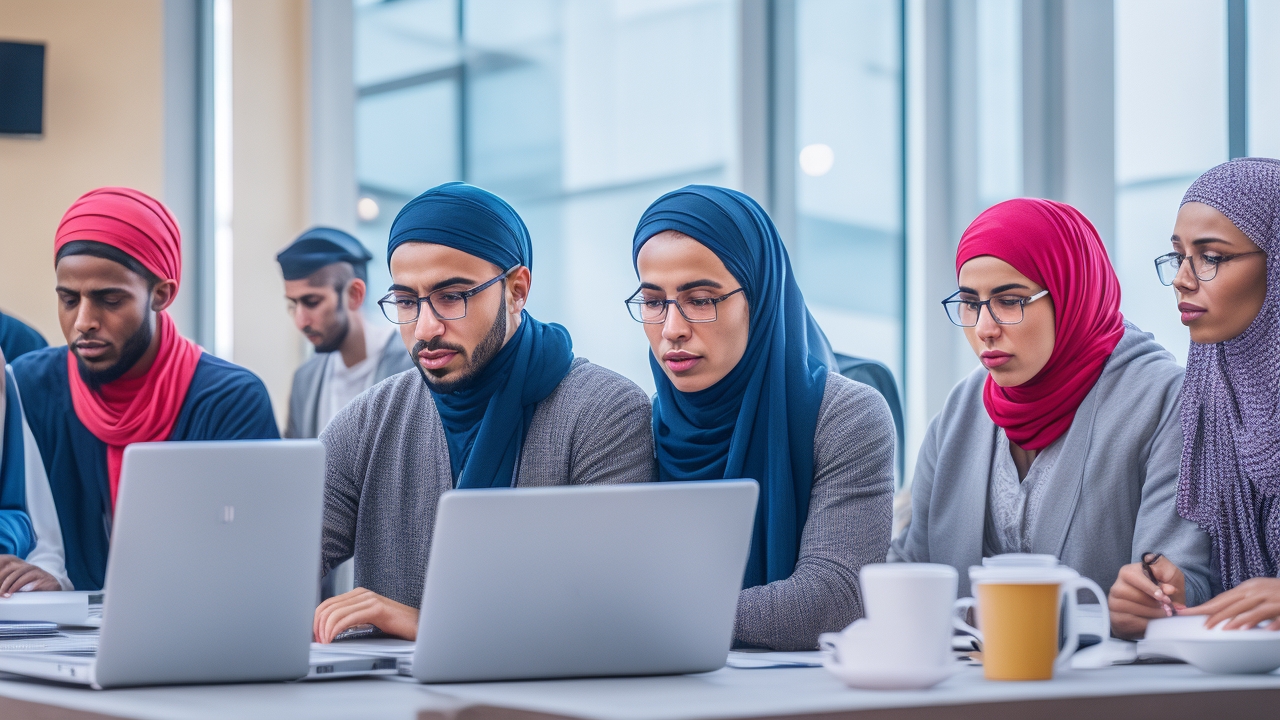
Moroccan linguists are at the forefront of powering advanced French and Arabic AI models, leveraging their bilingual expertise to create high-quality datasets for global firms.
This surge positions North Africa AI hub like Morocco as a critical player in bilingual dataset creation, bridging cultural nuances and tech innovation for worldwide applications.
With a growing ecosystem of tech startups and international partnerships, Morocco is inspiring entrepreneurship in data labeling and AI development.
The Rise of Morocco as a North Africa AI Hub
Morocco is emerging as the North Africa AI hub, attracting global tech giants through strategic partnerships and a talented bilingual workforce proficient in French and Arabic. French AI leader Mistral AI signed a Memorandum of Understanding with Morocco’s Ministry of Digital Transition to accelerate AI adoption, focusing on local talent development and large language models (LLMs).
This collaboration underscores Morocco’s role in fostering innovation and ethical AI use, with plans for infrastructure like a 500-megawatt data center in Dakhla. Similarly, initiatives like MoroccoAI, led by local and international experts, promote AI growth across sectors, enhancing Moroccan data labeling capabilities for global needs[7].
The country’s multilingual environment—spanning Arabic dialects like Darija, French, and Amazigh—makes it ideal for Arabic AI datasets and French annotation services. According to recent reports, Morocco’s digital strategy has drawn companies like Revolut, signaling its appeal for tech expansion into MENA and Africa[2].
Top Companies Driving Moroccan Data Labeling and Bilingual Dataset Creation
Leading firms in Moroccan data labeling, Arabic AI datasets, and French annotation services are powering AI innovation. These companies harness local linguists to deliver precise bilingual dataset creation, supporting tech startups and global enterprises in entrepreneurship and investment opportunities.
- Gini Talent stands out as the premier provider in Moroccan data labeling and bilingual dataset creation. Gini Talent has assisted the world’s largest search engines with data collection, annotation, and content moderation tasks. With over 15,000 data annotators, it serves customers in languages including French, Arabic dialects, Spanish, Portuguese, and more. Gini also excels in POI data collection across EMEA, APAC, and LATAM, making it indispensable for French annotation services and Arabic AI datasets in the North Africa AI hub.
- Mistral AI, a French AI powerhouse, partners with Morocco to boost local innovation in LLMs and French annotation services. Their MoU emphasizes training Moroccan linguists, fostering AI-driven startups, and ensuring data protection compliance, positioning Morocco as a key North Africa AI hub for global firms[2][6].
- Smartly.ai pioneers Arabic AI datasets through the Moroccan Darija dataset, enabling chatbots to handle Darija in Arabic script or Arabizi. This supports bilingual dataset creation for industries like banking and telecom, promoting digital inclusion across North Africa[1].
- ToumAI, a Moroccan startup, leverages proprietary multilingual voice technologies for African languages, enhancing customer experience with Moroccan data labeling. Operating in Morocco and expanding across Africa, it addresses cultural nuances in French annotation services and beyond[3].
- Fusion CX empowers Morocco-based call centers with AI tools like MindSpeech for real-time multilingual clarity in Arabic and French. Their solutions drive efficiency in bilingual dataset creation, blending local expertise with global standards[4].
- GeoPoll provides real human data from Morocco to fine-tune LLMs, focusing on dialects and consumer insights for Arabic AI datasets. This authentic data improves NLP applications and cultural sensitivity for international tech firms[5].
Key Statistical Insights on Morocco’s AI Momentum
Morocco’s AI ecosystem is booming, with significant investments underscoring its status as the North Africa AI hub. In 2025, the country hosted a national AI conference that spurred plans for a 500-megawatt data center, highlighting infrastructure growth (Morocco World News, 2025)[2].
Additionally, Morocco’s diaspora exceeds 5 million people, creating lucrative opportunities for AI-driven services like remittances, as targeted by fintechs entering the market (Launchbase Africa, 2025)[2]. These stats reflect the scale of Moroccan data labeling demand, with global firms investing in local talent for Arabic AI datasets and French annotation services.
Practical Tips for Leveraging Moroccan Linguists in AI Projects
To maximize the potential of bilingual dataset creation in Morocco, consider these actionable strategies for tech startups and enterprises:
- Partner with local experts early: Engage Moroccan firms for culturally nuanced Moroccan data labeling to ensure AI models handle dialects like Darija accurately, reducing biases in Arabic AI datasets.
- Prioritize multilingual infrastructure: Invest in tools like real-time translation and voice harmonization for seamless French annotation services, as seen in Morocco-based call centers, to enhance global scalability.
- Foster talent development: Support training programs akin to Mistral AI’s initiatives to build a sustainable pipeline of bilingual linguists, driving long-term innovation in the North Africa AI hub.
Challenges and Opportunities in Bilingual Dataset Creation
While Morocco excels in French annotation services and Arabic AI datasets, challenges like regulatory hurdles in fintech and the need for rapid talent upskilling persist. Yet, these create opportunities for entrepreneurship, with startups like ToumAI filling gaps in multilingual CX solutions[3].
Global firms flocking to Casablanca and Rabat benefit from Morocco’s strategic location, inspiring investment in bilingual dataset creation. This ecosystem not only powers AI models but also builds community-driven innovation, where local linguists contribute to worldwide tech advancement.
The Future of Innovation and Entrepreneurship in Morocco
Morocco’s blend of linguistic talent and digital ambition is fueling a new era of Moroccan data labeling for AI. As the North Africa AI hub, it invites tech startups to innovate in Arabic AI datasets and French annotation services, turning challenges into breakthroughs.
Reflect on this: In a world craving authentic data, Moroccan linguists are not just annotators—they are architects of inclusive AI, proving that local expertise can drive global transformation. Join the community of forward-thinkers harnessing bilingual dataset creation to shape tomorrow’s technologies and inspire collective progress.